Close
Click or press [Enter] to view the results
Trends


Printed Fabrics View articles
Telas en Colores Lisos View articles
Telas para Imprimir View articles
Trends
Printed Fabrics View articles
Telas en Colores Lisos View articles
Telas para Imprimir View articles


Elige colores lisos a juego con tu estampado favorito. ¡Selecciona aquí alguno de los colores principales!
| Material: | 100% Polyester |
| Width (cm): | 150 |
| Grammage (g/m²): | 160 |
| Pattern: | Very Simple, Vector pattern, Moles, Points, Light |
| Features: | Water repellent, Wrinkled, Antibacterial |
| Application / Use: | Racks, Pictures, Deckchairs, Pants, Wallet |
| Manufacturing Method: | Single-sided digital textile printing, all products are custom-made to order. |
| Care: |
     |
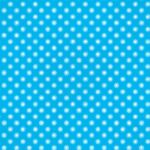
The fabric we want to focus on is the Antibacterial Water-Repellent Fabric - Tromso, a technical fabric made of 100% polyester with a weight of 160 gr/m2 and a width of 150 cm. The printed design on this fabric has a very simple complexity, playing with circular and polka dot shapes, with neon blue, cotton white, and butterfly blue being the predominant colors.
This design is perfect for adding a fresh and modern touch to fashion accessories such as backpacks or wallets, as well as in the decoration of cushions and tablecloths. In addition, it can be combined with solid colors in neutral or blue tones to achieve a more modest or energetic finish respectively.
The fabric printed with this design has impressive characteristics, thanks to its water-repellent finish and its antibacterial treatment. Its texture is rough to the touch, which provides a resistant and durable feel in the applications it is given.
On the other hand, the fabric can be used in various applications thanks to its resistance and durability. In addition to the uses already indicated, such as fashion and decoration, it can also be used in the manufacture of outdoor chairs thanks to its impermeability.
As for care, it is recommended not to bleach, not to tumble dry, and to iron at a warm temperature, so as not to damage the antibacterial water-repellent treatment, which will prolong the life of the fabric.
The printing technology used for the manufacture of this fabric is sublimation, which allows the creation of vivid and colorful designs on synthetic fabrics using ink, heat, and pressure. In this case, sublimation is applied to one side of the fabric, achieving an optimal finish that is resistant to fading for a long time.