Close
Click or press [Enter] to view the results
Trends


Printed Fabrics View articles
Telas en Colores Lisos View articles
Telas para Imprimir View articles
Trends
Printed Fabrics View articles
Telas en Colores Lisos View articles
Telas para Imprimir View articles


Elige colores lisos a juego con tu estampado favorito. ¡Selecciona aquí alguno de los colores principales!
| Material: | 75% Polyester, 25% Elastane |
| Width (cm): | 150 |
| Grammage (g/m²): | 230 |
| Pattern: | Standard, Brilliant, Iridescent, Light |
| Features: | Elastic, Chlorine Resistant, Very High UV Protection 50+ |
| Application / Use: | Body, Bikinis, Swimsuit, Jersey, Tights / Leggings |
| Sustainability certificates: | GRS |
| Manufacturing Method: | Single-sided digital textile printing, all products are custom-made to order. |
| Care: |
     |
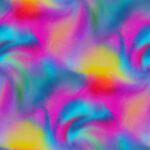
The base fabric is Recycled Lycra - Seal with a weight of 230 gr/m2 and a composition of 75% Polyester and 25% Elastane. Its printed design is complex, with a bright and iridescent style in multicolored tones. This design can be combined with solid colors in shades of blue, yellow, or green to create vibrant and attractive outfits. The fabric is printed with the stamped design on one side using digital textile printing. The combination of Lycra and digital textile printing ensures that the fabric has an elastic texture and a chlorine-resistant finish that provides very high UV protection of 50+ UPF.
Recycled Lycra - Seal is a versatile fabric that can be used in different applications and uses, from lingerie and sportswear to swimwear and leotards. Thanks to its elastic capacity, it adapts perfectly to the body and allows freedom of movement, making it an ideal choice for sportswear such as tights or leggings. In addition, its sustainable recycled composition makes it eco-friendly and respectful of the environment.
It is important to note that Recycled Lycra - Seal requires special care to maintain its appearance and quality. It is recommended to wash at maximum temperatures of 40°C without bleach and air dry. Ironing should be done at low temperatures and a dryer should not be used.
The printing technology used to manufacture this fabric is sublimation (polyester), which involves the transfer of ink through heat and pressure so that it integrates into the fibers of the fabric. This produces an optimal result in terms of durability, clarity, and vibrancy of the printed design. Contrary to direct stamping printing, digital textile printing is used for complex designs, with enriching details, and in multiple color combinations.