Close
Click or press [Enter] to view the results
Trends


Printed Fabrics View articles
Telas en Colores Lisos View articles
Telas para Imprimir View articles
Trends
Printed Fabrics View articles
Telas en Colores Lisos View articles
Telas para Imprimir View articles


Elige colores lisos a juego con tu estampado favorito. ¡Selecciona aquí alguno de los colores principales!
 Order sample
| Material: | 100% Polyester |
| Width (cm): | 150 |
| Grammage (g/m²): | 200 |
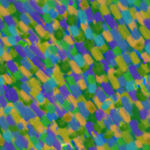
| Pattern: | Brushstrokes, Painting, Simple, Modern Art, Artistic |
| Features: | Waterproof, Granules, Wrinkled, Opaque |
| Application / Use: | Trench coat, Raincoats, Raincoats, Cushions, Awning |
| Manufacturing Method: | Single-sided digital textile printing, all products are custom-made to order. |
| Care: |
    |
The Waterproof - Outdoor Fabric is a technical textile made of 100% polyester, with a weight of 200 gr/m2 and a width of 150 cm. This fabric features a waterproof finish and has a grainy, rough texture, which gives it a certain resistance. The printed design that can be applied to this fabric has attributes such as abstract, brushstroke, artistic, simple, diagonal, and colorful, making it perfect for various applications ranging from fashion to decoration, for both outdoor and indoor use. Regarding printing, the design is applied to one side using digital textile printing, allowing for greater fidelity in color reproduction.
In terms of its general characteristics, the fabric is waterproof and resistant, making it perfect for outdoor applications such as raincoats or awnings. In addition, it has a rough texture that gives it a rustic and somewhat robust appearance, ideal for a more resistant and durable image. The printed design is colorful and striking, making it ideal for adding touches of originality to garments or accessories where it is applied.
The applications and uses of this fabric are varied. It can be used for making fashion garments such as trench coats, raincoats, or parkas, as well as for making outdoor cushions or tablecloths. It is also ideal for awnings and outdoor space decoration.
Regarding fabric care, it is important not to bleach it and avoid dry cleaning. It is recommended to iron at low temperature and not use a tumble dryer to prolong its useful life. It is important to consider these recommendations to prevent the fabric from losing its waterproof properties.
Finally, the printing technology used in the manufacture of this fabric is sublimation. This process consists of printing the design on paper, which is then placed on the fabric and subjected to high temperatures and pressures, thus achieving a transfer of the ink to the fabric. This method allows for high-quality prints and fidelity in color reproduction.