Close
Click or press [Enter] to view the results
Trends


Printed Fabrics View articles
Telas en Colores Lisos View articles
Telas para Imprimir View articles
Trends
Printed Fabrics View articles
Telas en Colores Lisos View articles
Telas para Imprimir View articles


Elige colores lisos a juego con tu estampado favorito. ¡Selecciona aquí alguno de los colores principales!
| Material: | 97% Polyester, 3% Elastane |
| Width (cm): | 150 |
| Grammage (g/m²): | 209 |
| Pattern: | Simple, Home Decoration, Botanist, Vector pattern, Leaves |
| Features: | Wrinkled, Elastic, Soft |
| Application / Use: | Pants, Cloths, Skirts, Jeans, Shorts |
| Manufacturing Method: | Single-sided digital textile printing, all products are custom-made to order. |
| Care: |
     |
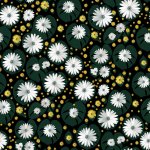
The base fabric is a high-quality, resistant bi-elastic twill called Lisboa, composed of 97% polyester and 3% elastane. Its grammage is 209 gr/m2 and it has a width of 150 cm. The printed design on this fabric is of simple complexity and in a home decoration style with botanical elements. In particular, it features plant leaves and flowers, with daisies as the prominent element. The design is multicolored, with vibrant and luminous tones that perfectly match the spring and summer style of the fabric. The Lisboa with the floral print can be combined with solid colors such as white, black, and green, to create different contrasts and combinations.
The fabric is printed with the design on one side using digital textile printing, which gives the print a crisp, clear, and defined finish. In terms of general characteristics, the texture is rough, elastic, and soft, making it a very comfortable and pleasant fabric to the touch. Its applications and uses are very wide, such as: pants, skirts, jeans, shorts, dresses, and accessories in womens and mens fashion. It can also be used in home textiles, such as in the kitchen for rags, cushions, napkins, and in the bedroom for cushions and in the living room for cushions.
Regarding care, this fabric should not be bleached, and the maximum washing temperature is 30ºC. Dry cleaning is allowed except for trichloroethylene, ironing at a cool temperature, and it cannot be tumble dried. With these care instructions, a long life for the fabric and its printed design is ensured.
Finally, the printing technology used is sublimation (polyester), which consists of printing the design on transfer paper and fixing it to the base fabric using heat and pressure. This technique allows for vibrant and precise colors that do not wear out or fade with use or washing.