Close
Click or press [Enter] to view the results
Trends


Printed Fabrics View articles
Telas en Colores Lisos View articles
Telas para Imprimir View articles
Trends
Printed Fabrics View articles
Telas en Colores Lisos View articles
Telas para Imprimir View articles


Elige colores lisos a juego con tu estampado favorito. ¡Selecciona aquí alguno de los colores principales!
| Material: | 93% Polyester, 7% Elastomer |
| Width (cm): | 145 |
| Grammage (g/m²): | 145 |
| Pattern: | Standard, Botanist, Drawn, Chart pattern, Leaves |
| Features: | Soft, Smooth |
| Application / Use: | Bermuda, Shirts, Clothespin Bag, Cushions, Swimsuit |
| Sustainability certificates: | GRS |
| Manufacturing Method: | Single-sided digital textile printing, all products are custom-made to order. |
| Care: |
    |
The base fabric we are referring to is the Recycled Sport Polyester - Basic, composed of 93% polyester and 7% elastomer, with a weight of 145 gr/m2 and a width of 145 cm. This fabric is sustainable because it is recycled and GRS certified. Its applications are diverse, suitable for sportswear, swimwear, bermudas, and sport shirts for women, men, and children, making it a timeless fabric.
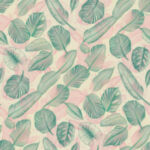
The printed design is botanical in style, drawn and graphically patterned, with standard complexity. The nature of the design includes plants and leaves with pictorial floral motifs and artistic flowers in multicolor tones. This design can be combined with solid colored fabrics such as black, navy blue, red, military green, and beige. The fabric is printed with the design on one side using digital textile printing.
The general characteristics of this fabric are its soft texture and feel, suitable for sportswear requiring a resistant and comfortable fabric. On the other hand, the printed design is vibrant and full of life, evoking nature with its floral and plant prints.
Regarding its applications, Recycled Sport Polyester - Basic is widely used in the manufacture of sportswear and swimwear, thanks to its resistance and elasticity. It can also be used in the creation of bermudas and sport shirts, as its composition allows for adequate breathability in warm climates.
For the care of this fabric, it is important to avoid bleaching and wash it at maximum temperatures of 40ºC. Ironing should be done at a cool temperature, and a dryer should not be used for drying.
Finally, the printing technology used to manufacture this fabric is sublimation, which allows for the transfer of the design image to the fabric through heat and pressure, achieving high quality and durability in the print.