Close
Click or press [Enter] to view the results
Trends


Printed Fabrics View articles
Telas en Colores Lisos View articles
Telas para Imprimir View articles
Trends
Printed Fabrics View articles
Telas en Colores Lisos View articles
Telas para Imprimir View articles


Elige colores lisos a juego con tu estampado favorito. ¡Selecciona aquí alguno de los colores principales!
| Material: | 94% Polyester, 6% Elastane |
| Width (cm): | 147 |
| Grammage (g/m²): | 80 |
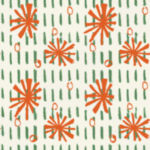
| Pattern: | Drawn, Botanist, Stripes, circles, Pictorial florals |
| Features: | Transparent, Thin, Elastic |
| Application / Use: | Skirts, Dresses, Dresses, Bras / B ralettes, Panties |
| Manufacturing Method: | Single-sided digital textile printing, all products are custom-made to order. |
| Care: |
     |
The base fabric is an Elastic Tulle - Oslo, with a composition of 94% polyester and 6% elastane, a weight of 80 gr/m2, and a width of 147 cm. It presents a soft and elastic texture to the touch, with a slight transparency and a smooth and delicate appearance. The printed design features a drawn and botanical style, with predominant shapes of stripes and circles, pictorial florals and artistic flowers, as well as plant petals. The main colors of the design are pink, orange, and hazelnut green. This fabric combines perfectly with plain colors in pastel shades, such as pale blue or soft yellow.
Digital textile printing is done on a single side of the fabric, using sublimation technology (polyester). Due to its elasticity and transparency, this fabric is ideal for use in fashion garments for both women and men, such as skirts, dresses, or accessories, as well as in lingerie and bridal wear. In addition, its soft and delicate touch makes it perfectly suited for garments that require a pleasant texture in contact with the skin, such as bralettes, briefs, or bodysuits.
It is important to consider the specific care instructions for this fabric, which include not bleaching, washing at a maximum temperature of 30ºC, not dry cleaning, not ironing, and not tumble drying. These care instructions will help maintain its elasticity and preserve its original appearance.
Regarding printing technology, sublimation uses a process in which designs are printed on transfer paper with special inks, and through an intense heat process, the designs are transferred to the fabric. This process allows for greater precision and resolution in printing, as well as greater durability in the final finish.