Close
Click or press [Enter] to view the results
Trends


Printed Fabrics View articles
Telas en Colores Lisos View articles
Telas para Imprimir View articles
Trends
Printed Fabrics View articles
Telas en Colores Lisos View articles
Telas para Imprimir View articles


Elige colores lisos a juego con tu estampado favorito. ¡Selecciona aquí alguno de los colores principales!
| Material: | 97% Polyester, 3% Elastane |
| Width (cm): | 146 |
| Grammage (g/m²): | 95 |
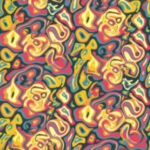
| Pattern: | Complex, Modern Art, Colorful, Waves, Dark |
| Features: | Brilliant, Smooth, Thin |
| Application / Use: | Shirts, Blouses, Kimono, Accessories, Monkeys |
| Manufacturing Method: | Single-sided digital textile printing, all products are custom-made to order. |
| Care: |
     |
The base fabric of this product is Raso - Amsterdam, a satin fabric with a composition of 100% polyester and a weight of 120 gr/m2. Its width is 150cm and it is easy to care for, allowing a maximum temperature of 40ºC, dry cleaning except trichloroethylene, and ironing at a warm temperature. It is ideal for fashion applications such as shirts, blouses, jumpsuits, skirts, trousers, tops, among others.
The printed design of this fabric is very striking, with a complexity in its form that reminds us of modern art, with waves of colors that create a unique sensory experience. The main colors of the design are multicolor and can be combined with plain colors such as white, black or beige. The fabric is printed with the stamped design on one side using digital textile printing.
As for the general characteristics, the visual texture is shiny while the touch is smooth and thin, which makes it very pleasant in contact with the skin. The fabric is resistant and of great durability, ideal for garments that will be used frequently.
In addition to the previously mentioned attributes, we highlight that Raso - Amsterdam is perfect for making kimonos, pajamas, wedding dresses and fashion accessories such as scarves due to its characteristic shine and delicacy.
Regarding the care that should be taken into account, it is recommended not to bleach the fabric and avoid high temperatures in washing and ironing. It is important to avoid trichloroethylene as it can damage the composition of the fabric.
Finally, the printing technology used in this fabric is polyester sublimation. This process is based on the transfer of pigmented substances by direct vaporization to the gaseous state, these being fixed on the surface of the substrate to finally form the print. This technique is very popular in the textile industry due to its high quality and durability.