Close
Click or press [Enter] to view the results
Trends


Printed Fabrics View articles
Telas en Colores Lisos View articles
Telas para Imprimir View articles
Trends
Printed Fabrics View articles
Telas en Colores Lisos View articles
Telas para Imprimir View articles


| Material: | 100% Organic cotton |
| Width (cm): | 150 |
| Grammage (g/m²): | 195 |
| Pattern: | Specks, Moles, Moles, Light |
| Features: | Soft, Rigid |
| Application / Use: | Racks, Pictures, Pants, Overshirts, Jeans |
| Sustainability certificates: | GOTS |
| Manufacturing Method: | Single-sided digital textile printing, all products are custom-made to order. |
| Care: |
     |
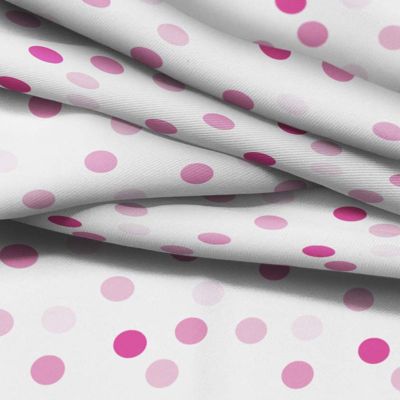
The organic cotton twill - Florence features a printed design composed of round shapes in different sizes and distributions in soft shades of pearl pink and deep mauve on an off-white background. This design conveys a sense of delicacy and sweetness, ideal for making clothing and accessories. This fabric is printed with the design on one side using digital textile printing. The fabric has a soft texture to the touch and a rigid structure, making it resistant to deformation and wrinkles. In combination with other soft tones, it can create environments of calm and harmony.
This organic twill fabric, with a weight of 195 gr/m2 and a width of 160 cm, is characterized by its softness and resistance to daily use. It is ideal for making garments such as trousers, overshirts, jeans, shorts, bermudas, and accessories such as purses and toiletry bags. In addition, it can be used in decoration to create outdoor and indoor cushions, tablecloths, napkins, table runners, and paintings.
It is important to follow specific recommendations regarding fabric care as this will influence the preservation of its attributes and appearance over time. For maintenance, it is recommended not to use bleach and the maximum washing temperature is 30ºC. Dry cleaning is permissible, except with trichloroethylene, and it should be ironed at a low temperature. Tumble drying is not allowed.
The printing technology used on this fabric is reactive direct digital printing, which is used on organic fibers such as cotton. This process allows the transfer of the design onto the fabric surface by direct application of reactive inks to the fabric with the help of digital technology. This process results in a high-quality and resistant print, maintaining the durability of the fabric and creating designs with great precision and detail.