Close
Click or press [Enter] to view the results
Trends


Printed Fabrics View articles
Telas en Colores Lisos View articles
Telas para Imprimir View articles
Trends
Printed Fabrics View articles
Telas en Colores Lisos View articles
Telas para Imprimir View articles


| Material: | 85% Polyester, 15% Elastane |
| Width (cm): | 150 |
| Grammage (g/m²): | 190 |
| Pattern: | Moles, Moles, Light |
| Features: | Soft, Elastic, Chlorine Resistant, Very High UV Protection 50+ |
| Application / Use: | Scrunchie, Scrunchies, Bikinis, Swimsuit, Swimsuit |
| Sustainability certificates: | GRS |
| Manufacturing Method: | Single-sided digital textile printing, all products are custom-made to order. |
| Care: |
     |
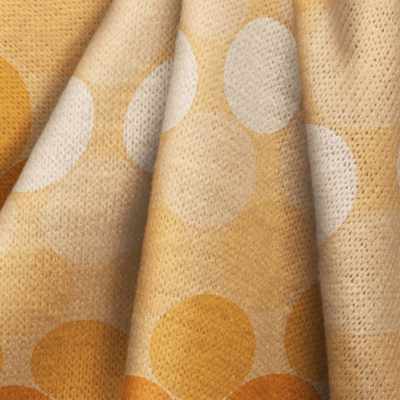
The 190 gr/m2 Recycled Lycra fabric features a printed design with rounded shapes, combining circles and polka dots in various sizes. The predominant colors are mango orange, light orange, and cinnamon orange, creating a vibrant and eye-catching effect. This design can be complemented with plain fabrics in brown, yellow, or green tones, providing a balanced and natural contrast.
Printed on one side using digital textile printing, this Lycra fabric has a soft and elastic texture, is chlorine resistant, and has a very high UV protection factor (50+). Additionally, being composed of 85% recycled polyester and 15% elastane, it is a sustainable and environmentally friendly fabric.
The applications and uses of this fabric are diverse, being ideal for making accessories such as scrunchies, as well as sports swimwear like bikinis and swimsuits. In the fashion realm, it is also a popular choice for making swimsuits with attractive and striking printed designs.
To ensure the durability and good condition of this fabric, specific recommended care instructions must be followed, such as washing at a maximum of 40ºC, avoiding the use of bleach, and not ironing at high temperatures. Furthermore, it is not suitable for dry cleaning or tumble drying.
The printing technology used for the manufacture of this fabric is sublimation with polyester, which allows the design colors to be permanently fixed on the fabric surface and not fade over time. This digital textile printing process consists of transferring the ink directly onto the fabric using heat and pressure, generating a high-quality and detailed result.