Close
Click or press [Enter] to view the results
Trends


Printed Fabrics View articles
Telas en Colores Lisos View articles
Telas para Imprimir View articles
Trends
Printed Fabrics View articles
Telas en Colores Lisos View articles
Telas para Imprimir View articles


| Material: | 94% Polyester, 6% Elastane |
| Width (cm): | 150 |
| Grammage (g/m²): | 180 |
| Pattern: | Crow's Foot, Dark |
| Features: | Elastic, Granules |
| Application / Use: | Dresses, Monkeys, T-shirts, Tops, Skirts |
| Manufacturing Method: | Single-sided digital textile printing, all products are custom-made to order. |
| Care: |
     |
| Notices: |
En colores lisos y/o estampados este tejido puede blanquear si se abre en exceso, es ampliamente adquirido por nuestros clientes en productos textiles que no exigen grandes elongaciones. Recomendamos adquirir una muestra para validar que es la textura y acabado que busca. |
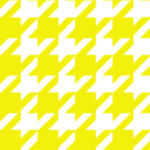
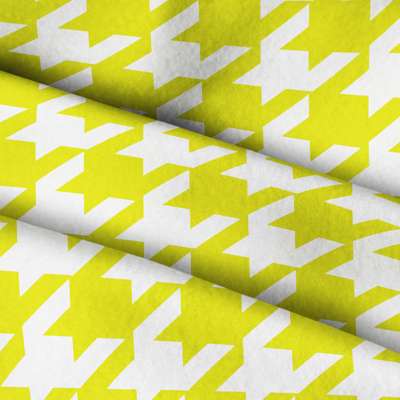
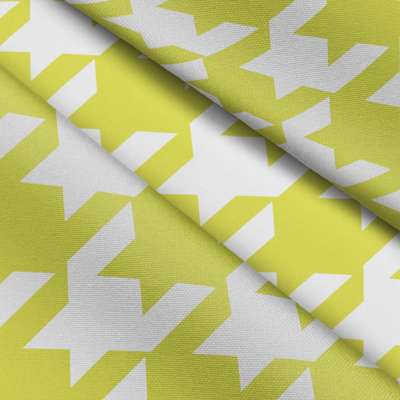
The Crepe de Punto Elástico - Riga is a crepe-type fabric made of 94% polyester and 6% elastane, with a weight of 180 gr/m2 and a width of 150 cm. Its printed design features Houndstooth shapes in canary yellow, cotton white, and corn yellow colors. This design can be perfectly combined with solid colors such as black or navy blue.
The fabric is printed with the stamped design on one side using digital textile printing, meaning that the design can only be seen on one side of the fabric. As for its characteristics, the Crepe de Punto Elástico - Riga stands out for its elastic and grainy texture, which makes it perfect for comfortable garments that adapt to the body.
This fabric can be used in a wide variety of applications, such as dresses, jumpsuits, t-shirts, tops, skirts, pants, cardigans, and knitwear. In addition, its season is timeless, which makes it a very versatile type of fabric.
To keep the Crepe de Punto Elástico - Riga in perfect condition, it is recommended not to bleach it, wash it at a maximum temperature of 40ºC, do not use trichloroethylene for dry cleaning, iron it at a cool temperature, and tumble dry at a reduced temperature.
The printing technology used on this fabric is sublimation (polyester), which consists of printing the design on transfer paper with sublimation ink and then pressing it onto the fabric at high temperatures so that the ink merges with the fibers of the fabric. This process guarantees high quality and durability in the printed design.