Close
Click or press [Enter] to view the results
Trends


Printed Fabrics View articles
Telas en Colores Lisos View articles
Telas para Imprimir View articles
Trends
Printed Fabrics View articles
Telas en Colores Lisos View articles
Telas para Imprimir View articles


Elige colores lisos a juego con tu estampado favorito. ¡Selecciona aquí alguno de los colores principales!
 Order sample
| Material: | 100% Polyester |
| Width (cm): | 150 |
| Grammage (g/m²): | 160 |
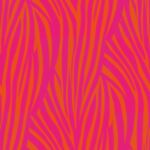
| Pattern: | Zebra, Simple, Decorative, Stripes, Dark |
| Features: | Water repellent, Wrinkled, Antibacterial |
| Application / Use: | Racks, Pictures, Deckchairs, Pants, Wallet |
| Manufacturing Method: | Single-sided digital textile printing, all products are custom-made to order. |
| Care: |
     |
The base fabric is the Antibacterial Water-Repellent Fabric - Tromso, a technical polyester fabric weighing 160 gr/m2 and measuring 150 cm wide. Its care instructions include not bleaching, washing at a maximum temperature of 60ºC, and not tumble drying. It is a timeless fabric that can be used in both fashion and decoration, and it also features sublimation printing technology.
The printed design on this fabric is characterized by a simple Animal Print Zebra pattern with a decorative style. The predominant shapes are stripes, and the main colors are multicolored. This design can be very well combined with solid colors such as white, black, or red.
The fabric is printed with the stamped design on one side using digital textile printing, meaning it is not a double-sided printed fabric but printed on one side only.
The general characteristics of the fabric are: a waterproof and antibacterial finish that gives it a rough texture to the touch. Its applications and uses are diverse, such as in fashion for making trousers, backpacks, wallets, and toiletry bags. Additionally, it can be used for interior decoration in items like paintings, deckchairs, tablecloths, cushions, and frames.
It is important to consider the fabrics care instructions for its proper maintenance and durability, avoiding bleaching and washing at high temperatures, with dry cleaning and warm ironing being preferable.
Finally, sublimation printing technology is a process where the ink adheres to the fabric permanently and with high quality, as the fabric is heated and the ink turns into gas to penetrate the fabric fibers.