Close
Click or press [Enter] to view the results
Trends


Printed Fabrics View articles
Telas en Colores Lisos View articles
Telas para Imprimir View articles
Trends
Printed Fabrics View articles
Telas en Colores Lisos View articles
Telas para Imprimir View articles


Elige colores lisos a juego con tu estampado favorito. ¡Selecciona aquí alguno de los colores principales!
| Material: | 100% Polyester |
| Width (cm): | 150 |
| Grammage (g/m²): | 82 |
| Pattern: | Brushstrokes, Painting, Street art, Colorful, Photography |
| Features: | Thin, Soft, Translucent, Granules |
| Application / Use: | Dresses, Dresses, Skirts, Blouses, Brides |
| Sustainability certificates: | GRS |
| Manufacturing Method: | Single-sided digital textile printing, all products are custom-made to order. |
| Care: |
     |
The base fabric for this printed design is Recycled Crepe Chine - Eros, a type of crepe fabric made of 100% polyester with a light weight of 82 gr/m2 and a width of 150 cm. Its texture and feel are delicate and soft, with a slight transparency and a grainy finish.
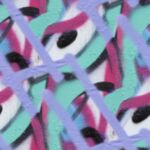
The printed design is characterized by being abstract, with brushstrokes of street art and painting in a colorful and imaginative style. The main colors are multi-toned, very vibrant and energetic, making it a very versatile design to combine with different solid colors.
The fabric is printed with the design on one side by digital textile printing, which gives great definition and realism to the design. In addition, thanks to sublimation technology, the print is perfectly integrated into the fabrics structure, guaranteeing its durability and resistance to wear.
As for the general characteristics of the fabric, its lightness and softness make it ideal for feminine fashion and lingerie applications, especially for making dresses, skirts, blouses, and bridal wear. It can also be used for manufacturing accessories such as scarves.
Regarding care, it is recommended not to bleach and to wash at a maximum temperature of 30ºC. It cannot be tumble dried, and it is advised to iron at a cool temperature. The fabric allows dry cleaning, except using trichloroethylene.
Regarding digital textile printing technology, sublimation consists of printing an image on transfer paper with special sublimation inks and then transferring it to the fabric using heat and pressure. During sublimation, the printed inks go from a solid to a gaseous state, penetrating the fiber and permanently fixing themselves to it.