Close
Click or press [Enter] to view the results
Trends


Printed Fabrics View articles
Telas en Colores Lisos View articles
Telas para Imprimir View articles
Trends
Printed Fabrics View articles
Telas en Colores Lisos View articles
Telas para Imprimir View articles


Elige colores lisos a juego con tu estampado favorito. ¡Selecciona aquí alguno de los colores principales!
| Material: | 97% Polyester, 3% Elastane |
| Width (cm): | 146 |
| Grammage (g/m²): | 95 |
| Pattern: | Colorful, Retro, Geometrics, Squares, Light |
| Features: | Brilliant, Smooth, Thin |
| Application / Use: | Shirts, Blouses, Kimono, Accessories, Monkeys |
| Manufacturing Method: | Single-sided digital textile printing, all products are custom-made to order. |
| Care: |
     |
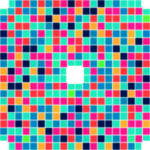
Raso - Ámsterdam fabric is a satin/satin with a composition of 100% polyester and a weight of 120 gr/m2. Its width is 150 cm and its printing technology is sublimation (polyester). Its printed design is characterized by its colorful and retro style, composed of square checks and multicolored tiles.
This printed design can be combined with plain colors such as blue, pink, yellow or green to achieve a balanced and harmonious atmosphere in interior decoration, or to give a stylish touch to fashion garments such as blouses, skirts, pants, shirts, tops or scarves.
In terms of its general characteristics, the visual texture of the fabric is bright, while the touch is smooth and delicate. It is perfect for creating elegant clothing for weddings, as well as for making pajamas and lingerie dresses. In addition, it is a timeless fabric that also adapts to the fashion trends of the autumn/winter 2021 season.
Among the applications and uses of the fabric, fashion in its different variants for men and women stands out, as well as kimonos and accessories. Due to its polyester composition, this fabric is easy to iron and can be washed at a maximum temperature of 40ºC, also allowing dry cleaning, with the exception of trichloroethylene. It can be tumble dried at low temperature.
The printing technology used to manufacture the Raso - Ámsterdam fabric is sublimation (polyester), a process in which the digital image is transferred to the fabric through the application of heat and pressure. This allows the printed design to be printed on one side only, and not on both, to achieve optimal image quality and greater durability of the fabric.