Close
Click or press [Enter] to view the results
Trends


Printed Fabrics View articles
Telas en Colores Lisos View articles
Telas para Imprimir View articles
Trends
Printed Fabrics View articles
Telas en Colores Lisos View articles
Telas para Imprimir View articles


Elige colores lisos a juego con tu estampado favorito. ¡Selecciona aquí alguno de los colores principales!
| Material: | 90% Polyester, 10% Elastane |
| Width (cm): | 150 |
| Grammage (g/m²): | 220 |
| Pattern: | Simple, Decorative, Artistic Flowers, Flowers, Dark |
| Features: | Elastic, Soft, Chlorine Resistant, Very High UV Protection 50+ |
| Application / Use: | Body, Bras / B ralettes, Knitwear, Tops, Scrunchies |
| Manufacturing Method: | Single-sided digital textile printing, all products are custom-made to order. |
| Care: |
     |
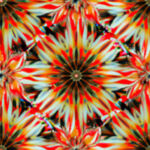
The Polyester Lycra fabric - Cairo 220 gr/m2 provides an elastic and soft texture that adapts to the body, ideal for sportswear, lingerie, and fashion. Its simply complex printed design, with a decorative style and floral motifs, as well as a kaleidoscope, offers a fun and versatile visual spectacle. The predominant multi-color design allows it to be combined with various plain colors such as black, white, pink, dark blue, and mint green. It is important to note that the fabric is digitally printed with the design on one side only.
The general characteristics of the fabric include a chlorine-resistant finish, with a very high UV protection factor UPF 50+ for sun protection. The fabric has a width of 150 cm and a weight of 220 gr/m2 with a composition of 90% polyester and 10% elastane. The printed design of flowers and kaleidoscope is ideal for sportswear, swimwear, lingerie, and fashion in general.
Regarding fabric care, it is important to avoid the use of bleach and not to tumble dry. It can be washed at a maximum temperature of 40ºC and ironing at a cool temperature is recommended. The fabric allows dry cleaning, except with trichloroethylene.
The printing technology used to manufacture this fabric is sublimation (polyester), which allows for sharp and vibrant reproductions of printed designs on the fabric. This process involves the thermal application of dyes to a fabric using a specialized inkjet printer on sublimation paper. The printed paper is placed on the fabric and subjected to high temperatures to transfer the design to the fabric. This process produces superior image quality, with designs that do not fade or lose detail over time and use.