Close
Click or press [Enter] to view the results
Trends


Printed Fabrics View articles
Telas en Colores Lisos View articles
Telas para Imprimir View articles
Trends
Printed Fabrics View articles
Telas en Colores Lisos View articles
Telas para Imprimir View articles


Elige colores lisos a juego con tu estampado favorito. ¡Selecciona aquí alguno de los colores principales!
| Material: | 100% Polyester |
| Width (cm): | 150 |
| Grammage (g/m²): | 200 |
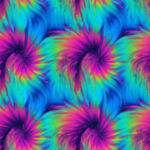
| Pattern: | Painting, Simple, Colorful, Vector pattern, Whirlwind |
| Features: | Waterproof, Granules, Wrinkled, Opaque |
| Application / Use: | Trench coat, Raincoats, Raincoats, Cushions, Awning |
| Manufacturing Method: | Single-sided digital textile printing, all products are custom-made to order. |
| Care: |
    |
The base fabric of this product is Waterproof Fabric - Outdoor, a technical fabric made of 100% polyester with a weight of 200 gr/m2 and a width of 150 cm. Its composition makes it water-resistant, ideal for making waterproof fashion garments or sportswear such as raincoats. In addition, it has a rough and granular finish that gives it texture, opacity, and a hard appearance, characteristic features of a technical fabric.
The printed design applied to this fabric has several defining attributes: it consists of a painting with simple shapes, but full of color and a vector pattern of swirls. The result is an eye-catching design with a modern and avant-garde style. The main colors are multi-colored, which makes it combinable with plain tones in different chromatic ranges, both warm and cool.
It is important to note that this fabric is printed on one side using digital textile printing, which means that the ink permeates only one side of the fabric. This design can be used for making garments, such as the exterior of cushions or armchairs, as well as for decorating awnings, tablecloths, or waterproof curtains.
Regarding care, it is important to keep in mind that this fabric should be treated with caution. It should not be bleached or dry cleaned, but it can be ironed at a low temperature, and it is not suitable for tumble drying. In addition, care must be taken when washing and drying the garment to avoid deterioration.
Finally, the printing technology used to produce this fabric is sublimation (polyester). This printing technique allows the transfer of ink from a solid base directly to the fabric using heat and pressure, achieving high resolution quality and a solid and durable finish.