Close
Click or press [Enter] to view the results
Trends


Printed Fabrics View articles
Telas en Colores Lisos View articles
Telas para Imprimir View articles
Trends
Printed Fabrics View articles
Telas en Colores Lisos View articles
Telas para Imprimir View articles


| Material: | 81% Polyester, 15% Acrylic, 4% Elastane |
| Width (cm): | 150 |
| Grammage (g/m²): | 239 |
| Pattern: | Vichy, Light |
| Features: | Soft, Elastic |
| Application / Use: | Pajamas, Jerseys, Tops, Knitwear, Dresses |
| Manufacturing Method: | Single-sided digital textile printing, all products are custom-made to order. |
| Care: |
     |
The fabric in question is Punto Jersey de Tacto Algodón - Atenas (Cotton-Feel Jersey Knit - Athens), a knit fabric with a composition of 81% polyester, 15% acrylic, and 4% elastane. With a weight of 239 gr/m2 and a width of 150 cm, it features a soft and elastic feel, making it ideal for knit garments such as jumpers, tops, dresses, and lingerie and pajama items. Additionally, its versatility also extends to home applications, being perfect for making blankets and napkins.
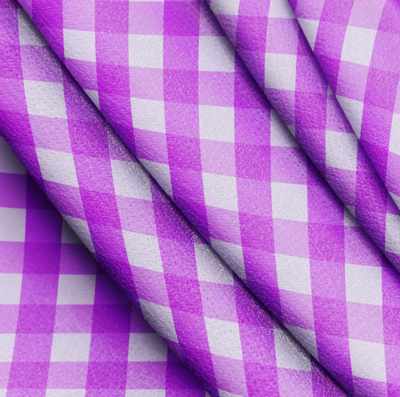
The printed design on this fabric is a combination of shapes and Vichy-style checks in multicolor. Details such as these shapes give the fabric a fresh and youthful aesthetic, perfect for fashion and decoration projects that require a touch of energy. The fabric can be combined with solid colors found in the print, such as blue, red, green, or yellow, creating an imaginative and cheerful chromatic palette.
It is important to note that this fabric is printed with the design on one side only using digital textile printing, which means the back of the fabric is plain and has no design.
In terms of general characteristics, the fabric stands out for its softness and elasticity, making it comfortable and pleasant to the touch. Regarding the print, it is a resistant and durable design thanks to the sublimation technology used in the printing process.
As for the care requirements of the fabric, it is recommended not to bleach it and to wash it at a maximum temperature of 30ºC. It is also recommended not to tumble dry and to iron at a cool temperature. Furthermore, dry cleaning is possible, except with trichloroethylene.
Finally, the fabric has been manufactured using sublimation printing technology. This technique uses heat and pressure to transfer the design printed on special paper onto the fabric through a dye evaporation process. Thanks to this, the design is printed durably and robustly, without cracking or deterioration over time.