Close
Trends


Printed Fabrics View articles
Telas en Colores Lisos View articles
Telas para Imprimir View articles
Trends
Printed Fabrics View articles
Telas en Colores Lisos View articles
Telas para Imprimir View articles


Elige colores lisos a juego con tu estampado favorito. ¡Selecciona aquí alguno de los colores principales!
| Material: | 85% Polyester, 15% Elastane |
| Width (cm): | 150 |
| Grammage (g/m²): | 190 |
| Pattern: | Very Simple, Chart pattern, Decorative, Points, Light |
| Features: | Soft, Elastic, Chlorine Resistant, Very High UV Protection 50+ |
| Application / Use: | Scrunchie, Scrunchies, Bikinis, Swimsuit, Swimsuit |
| Sustainability certificates: | GRS |
| Manufacturing Method: | Single-sided digital textile printing, all products are custom-made to order. |
| Care: |
     |
Recycled Lycra fabric is an elastic fabric weighing 190 gr/m2, composed of 85% polyester and 15% elastane. This fabric is designed for use in swimwear, such as bikinis or swimsuits, as well as in other items like scrunchies and hair ties. This fabric has GRS certification and its printing technology is sublimation on polyester.
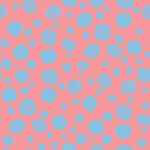
The printed design features a very simple graphic pattern, with circle and dot shapes in main colors of 59.68% and 18.61% respectively. This design could be combined with other plain colors like white, black, green, or navy blue to create harmonious looks.
The fabric texture is soft and elastic, making it very comfortable to wear. In addition, it has finishes with chlorine resistance and very high UV protection 50+. The design, for its part, is decorative and adds a touch of style.
The applications and uses of this fabric are varied, from swimwear to accessories like scrunchies and hair ties. In the creation of swimwear, this fabric is very suitable thanks to its elasticity and chlorine resistance, which makes it durable and ensures a perfect fit to the body.
For its care, it is recommended to wash at a maximum temperature of 40ºC, do not bleach, iron at a cool temperature, and do not tumble dry. This fabric is printed on one side by digital textile printing.
Sublimation printing technology on polyester uses heat to transfer ink to the fabric threads. The result is a sharp and durable image that does not fade, crack, or tarnish over time. This process is very popular in creating prints, as it allows for the creation of complex and detailed designs with great ease.