Close
Trends


Printed Fabrics View articles
Telas en Colores Lisos View articles
Telas para Imprimir View articles
Trends
Printed Fabrics View articles
Telas en Colores Lisos View articles
Telas para Imprimir View articles


Elige colores lisos a juego con tu estampado favorito. ¡Selecciona aquí alguno de los colores principales!
 Order sample
| Material: | 100% Polyester |
| Width (cm): | 150 |
| Grammage (g/m²): | 160 |
| Pattern: | Very Simple, Chart pattern, Decorative, Points, Light |
| Features: | Water repellent, Wrinkled, Antibacterial |
| Application / Use: | Racks, Pictures, Deckchairs, Pants, Wallet |
| Manufacturing Method: | Single-sided digital textile printing, all products are custom-made to order. |
| Care: |
     |
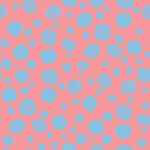
The Tromso - Hydrophobic Antibacterial Fabric features a Very Simple patterned design with a decorative graphic pattern of circles and dots in two main colors, with the first predominating at 59.68% and the second at 18.61%. This design can be complemented by a wide variety of solid tones, for example, combining the circles with a dark green tone or the dots with an ash grey tone. These colors can be selected according to the application or use given to the fabric, as its characteristics adapt perfectly to different creative projects.
The technical fabric is made of 100% polyester and has a weight of 160 gr/m2 with a width of 150 cm. It features a waterproof and water-repellent finish, with a rough texture and an antibacterial finish that makes it ideal for projects requiring high resistance to water and germs. The fabric is printed with the patterned design on one side by digital textile printing, which allows it to have high resolution and image quality.
Thanks to the characteristics of the fabric, its application is ideal for a wide variety of projects. It can be used in fashion to create accessories such as backpacks or wallets, as well as to make trousers for women and men. In addition, it is also perfect for decoration projects such as paintings, sun loungers, tablecloths, cushions of different styles, and textiles for bedrooms, living rooms, and kitchens.
It is important to note that the fabric requires specific care to prolong its lifespan. It should not be bleached, tumble dried, and ironing should be at a warm temperature. Dry cleaning is also recommended, except for trichloroethylene.
The printing technology used to manufacture the fabric is sublimation (polyester). This technique involves printing on special paper with sublimable inks and transferring the image to the fabric using heat by pressing the paper onto it. This achieves a high-quality and high-resolution image.