Close
Click or press [Enter] to view the results
Trends


Printed Fabrics View articles
Telas en Colores Lisos View articles
Telas para Imprimir View articles
Trends
Printed Fabrics View articles
Telas en Colores Lisos View articles
Telas para Imprimir View articles


Elige colores lisos a juego con tu estampado favorito. ¡Selecciona aquí alguno de los colores principales!
| Material: | 97% Polyester, 3% Elastane |
| Width (cm): | 146 |
| Grammage (g/m²): | 95 |
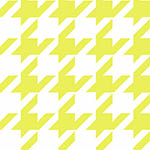
| Pattern: | Crow's Foot, Light |
| Features: | Brilliant, Smooth, Thin |
| Application / Use: | Shirts, Blouses, Kimono, Accessories, Monkeys |
| Manufacturing Method: | Single-sided digital textile printing, all products are custom-made to order. |
| Care: |
     |
Raso Ámsterdam fabric is a polyester satin with a weight of 120 gr/m2 and a width of 150 cm. Its printed design features an original combination of Houndstooth shapes in corn yellow and cotton white tones. This design offers a bright visual texture and a smooth and thin feel, adding an elegant and sophisticated touch to the garment or accessory being made. In addition to its yellow and white combination, it could also combine with other plain colors such as black or navy blue.
This fabric is printed with the stamped design on one side using digital textile printing, meaning that the printing is done on only one side of the fabric. In terms of its general characteristics, this polyester fabric offers great durability and resistance to deformation. For its part, the printed design provides great quality and definition in its shapes and colors.
Regarding the applications and uses of this fabric, its versatility stands out for making fashion garments and accessories for men and women such as blouses, shirts, skirts, pants, tops, kimonos or pajamas. It can also be used for making accessories such as scarves or for bridal lingerie thanks to its elegant design.
As for the care that should be taken into account for this fabric, it is recommended not to bleach it and to wash it at a maximum temperature of 40ºC. Dry cleaning is possible with the exception of trichloroethylene. It is recommended to iron it at a warm temperature and avoid its exposure to high temperatures in the dryer.
Finally, the printing technology used to manufacture this fabric is sublimation, a technique that consists of transferring ink to a substrate through the application of heat and pressure. This process is carried out after printing the design on a special transfer and then applying it to the fabric using a heat press.