Close
Click or press [Enter] to view the results
Trends


Printed Fabrics View articles
Telas en Colores Lisos View articles
Telas para Imprimir View articles
Trends
Printed Fabrics View articles
Telas en Colores Lisos View articles
Telas para Imprimir View articles


Elige colores lisos a juego con tu estampado favorito. ¡Selecciona aquí alguno de los colores principales!
| Material: | 97% Polyester, 3% Elastane |
| Width (cm): | 150 |
| Grammage (g/m²): | 209 |
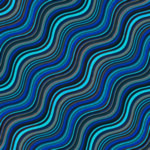
| Pattern: | Very Simple, Decorative, Waves, Lines, Sea |
| Features: | Wrinkled, Elastic, Soft |
| Application / Use: | Pants, Cloths, Skirts, Jeans, Shorts |
| Manufacturing Method: | Single-sided digital textile printing, all products are custom-made to order. |
| Care: |
     |
The Bi-elastic Twill Fabric - Lisbon is a twill fabric with a composition of 97% POLYESTER and 3% ELASTANE, making it elastic and comfortable to the touch. Its weight is 209 gr/m2 and its width is 150 cm. Its printed design is characterized by being very simple and with a decorative style, with wave and line shapes that imitate water and the sea, in main multicolor colors. This design combines perfectly with plain colors such as navy blue, white, and black. The fabric is printed with this design on one side by digital textile printing.
The general characteristics of the fabric are its rough and elastic texture with a soft touch. As for the printed design, its complexity is very simple, which makes it simple but visually appealing. Its decorative style is perfect for applications in fashion, accessories, and decoration, and its water and sea-inspired nature makes it ideal for use in beach homes or nautical decorative styles.
Among the applications and uses of the fabric, its use for making pants, skirts, jeans, shorts and bermudas, dresses and fashion accessories, as well as for creating kitchen cloths and cushions, embroidery hoops, and decorative paintings stand out. Because its design is timeless, it can be used in any season.
The care instructions for this fabric are: do not bleach, wash at a maximum temperature of 30ºC, dry cleaning is allowed except for trichloroethylene, iron at a cool temperature, and tumble drying is not allowed.
This fabric is printed with sublimation technology (polyester), which means that the colors are transferred to the fabric through a process of heat and pressure. This allows the design to be resistant to washing and wear.